Newsletter
The veterinarians and staff at the Fredericktown Animal Hospital are pleased to provide you with an  online newsletter. This fun and fact-filled newsletter is updated on a regular basis.
Included in the newsletter are articles pertaining to pet care, information on our animal hospital, as well as news on the latest trends and discoveries in veterinary medicine.
Please enjoy the newsletter!
Our Vets Offer Outstanding Service For Your Furry Family
April 16, 2023
When it comes to your pet's health and happiness, finding the right veterinarian is crucial. We understand that choosing the best animal hospital can feel overwhelming, but we’re here to help make the decision easier for you and your furry friend. Here are some essential tips to guide you in finding the perfect veterinary care.
Look for Experience and Expertise
Start by looking for an animal hospital with a team of experienced veterinarians who specialize in a wide range of services. Our veterinarians have years of experience and are well-versed in general care, surgical procedures, dental health, and more. Choosing the best animal hospital means selecting one that can handle all your pet's needs, from routine check-ups to emergency care.
Consider the Facility and Services Offered
Visit the animal hospital to get a feel for the facility. A clean, welcoming environment with up-to-date equipment is essential. We pride ourselves on maintaining a modern facility with state-of-the-art technology. Additionally, our hospital offers a range of services including vaccinations, diagnostics, dental care, and surgery, making us a comprehensive choice for those seeking the best animal hospital.
Read Reviews and Get Recommendations
Check online reviews and ask fellow pet owners for recommendations. Feedback from other pet parents can provide valuable insights into the quality of care provided by a veterinary practice. We are proud of our positive reviews and the trust we have earned from the community.
Evaluate the Level of Compassion and Communication
A great vet not only provides excellent medical care but also offers compassion and clear communication. We believe in building strong relationships with both pets and their owners. Our friendly team is always here to answer your questions, explain treatment options, and ensure your pet feels comfortable and safe.
Choosing the right vet for your pet involves considering a combination of experience, facility quality, client reviews, and compassionate care. We invite you to visit our hospital and see firsthand why so many pet owners consider us to be the best animal hospital. Contact us today to feel confident that your pet is in the best hands possible!
Learn Why Pet Diagnostics Are Essential for Your Pet's Health
March 05, 2023
We understand that your pet is a cherished member of your family, and their health and well-being are paramount. That’s why we emphasize the importance of our pet diagnostics in maintaining your pet’s health and ensuring they receive the best possible care.
Pet diagnostics play a crucial role in identifying health issues that may not be immediately apparent. Pets are often skilled at hiding discomfort or symptoms of illness, making it challenging for pet owners to detect underlying problems. This is where diagnostics come into play. By using advanced diagnostic tools and techniques, our staff can uncover issues before they develop into more serious conditions.
Early detection is one of the most significant benefits of our pet diagnostics. Routine tests and screenings can help our veterinarians identify diseases such as diabetes, kidney disease, or thyroid imbalances in their early stages. Catching these conditions early can significantly improve the chances of successful treatment and management, often leading to a better quality of life for your pet.
Diagnostics are not only for sick pets; they are also a valuable part of preventive care. Regular health screenings can help us monitor your pet’s overall health and spot potential issues before they become problematic. For instance, blood tests can provide insight into your pet's organ function and detect issues like anemia or infections. Similarly, imaging techniques like X-rays or ultrasounds can help us examine internal structures, aiding in the diagnosis of conditions like tumors or fractures.
We use state-of-the-art equipment and technology to perform our pet diagnostics, ensuring that your pet receives accurate and timely results. Our compassionate team is dedicated to making the diagnostic process as comfortable and stress-free as possible for your furry friend.
Our pet diagnostics are essential for proactive and preventive pet care. By detecting health issues early and monitoring your pet's health regularly, we can provide timely treatment and maintain their overall well-being. If you have concerns about your pet’s health or want to schedule a diagnostic exam, contact our team today. We’re here to ensure your pet stays happy and healthy for years to come.
The Importance of Dental Cleanings for Your Pets
January 12, 2023
We understand that your pet's health is a top priority. Regular dental cleanings are a crucial aspect of maintaining your pet's overall well-being. As your trusted veterinarian, we want to emphasize the importance of dental care for pets and how it can prevent serious health issues. Just like humans, pets can suffer from dental problems if their teeth and gums are not properly cared for. Here are some key reasons why dental cleanings are essential for your furry friends:
Prevents Dental Disease
Dental disease is one of the most common health problems in pets. Without regular cleanings, plaque and tartar can build up on your pet's teeth, leading to gum disease, tooth decay, and even tooth loss. Regular cleanings can prevent these issues and keep your pet's mouth healthy.
Reduces Bad Breath
Bad breath in pets is often a sign of underlying dental problems. By maintaining regular dental cleanings, you can ensure your pet's mouth stays fresh and free from bacteria that cause bad breath. This not only makes cuddling with your pet more pleasant but also indicates a healthier mouth.
Prevents Pain and Discomfort
Dental issues can cause significant pain and discomfort for pets. Gum infections, broken teeth, and abscesses can lead to difficulty eating and drinking. By having your pet's teeth cleaned regularly by a veterinarian, you can prevent these painful conditions and ensure your pet is comfortable and happy.
Supports Overall Health
Oral health is closely linked to overall health. Bacteria from dental infections can enter the bloodstream and spread to vital organs, leading to serious health problems such as heart, liver, and kidney disease. Regular dental cleanings can help prevent these systemic issues and contribute to your pet's long-term health.
Our Dental Cleaning Process
We use advanced dental equipment and techniques to provide thorough cleanings for your pets. Our process includes:
• Comprehensive oral examination to assess the health of your pet's teeth and gums
• Scaling to remove plaque and tartar buildup
• Polishing to smooth the surface of the teeth and prevent future plaque accumulation
• Fluoride treatment to strengthen teeth and protect against decay
As your dedicated veterinarian, we recommend scheduling dental cleanings at least once a year to maintain your pet's oral health. In addition to professional cleanings, we also provide guidance on at-home dental care to help you keep your pet's teeth in top condition between visits.
Contact our team to schedule a dental cleaning for your pet. We’re always just a call or text away!
The Health Benefits of Owning A Pet
July 10, 2022
Owning a pet is a lot like having a child. It will require food and drink, opportunities for physical and mental exercise, guidance, attention and love. And, it will give you something back in return. There’s an adage that claims “healthy pet, healthy you,” and it’s true for several reasons.
Imagine bringing a new puppy home. You’re already on the road to being a good pet parent because you’ve done some reading and know how important socialization is for young animals living in a world full of people and the sights and sounds that go with that. After getting settled at home and making sure your pet has visited your veterinarian for any necessary vaccines, you decide to introduce your pet to your neighborhood by taking him for a walk. As you strut around the block with your new prized possession, people begin to notice your adorable ball of fluff. Children and adults you pass will ask to pet your pooch and conversation will follow about his age, breed and so on. These conversations continue to occur and grow into possible friendships at training classes, the dog park and even with other pet-minded individuals online. Pet ownership increases opportunities for exercise, outdoor activities and socialization – as quickly as that.
Pets Lead to More Physical Activity and Socialization
With all those bathroom walks and outdoor adventures, it isn’t surprising to find dog owners are more physically active and less likely to be obese than those without a canine to care for. Other pets may not require outdoor walks, but they do require cage or litter-box cleanings, daily replenishing of food and water, and some form of indoor exercise or interaction that takes away from time which may otherwise be spent planted in front of a television.
Pets can also influence us to be more social and develop relationships with other people and their pets. This may not seem important, but studies have shown people with more social relationships often live longer and are less likely to experience both metal and physical decline as they age.
Additional Health Benefits of Pet Ownership
• Heart Health: The National Institute of Health (NIH) and the Centers for Disease Control and Prevention (CDC) have both conducted studies showing people with pets are less likely to suffer from heart attack. Pets are proven to lower blood pressure, cholesterol and triglyceride levels, and because pets help reduce stress, pet owners who are recovering from a heart attack will do so more quickly.
• Emotional Health: There’s nothing quite like coming home to a wagging tail or purring cat. In addition to reducing feelings of loneliness, pets provide their owners with a sense of purpose, which is crucial in combating depression. It’s understandable why pets are used to bring joy to the sick or elderly in hospitals and nursing homes.
• Immune System Health: Research published in the Journal of Allergy and Clinical Immunology has shown children develop stronger immune systems when exposed to animals early in life. One pediatrician found having a pet in the home can lower a child’s likelihood of developing pet allergies by as much as 33 percent.
5 Easy Tips to Socialize Your Older Dog
June 11, 2022
If you’re adopting an older dog for the first time or noticed that your dog has some behavioral issues, remember that it’s never too late to begin socializing them.
Although it’s recommended to socialize puppies during the first year of their life, some owners miss this period or don’t understand its importance.
However, we’re here to make the process straightforward–you need a plan that’s executed consistently.
Keep reading to learn five simple ways to socialize your older dog today!
Frequent Walks
All dogs should be getting at least one walk a day, but older dogs that aren’t socialized need them especially. This is because walking will naturally expose your dog to different sights, smells, sounds, and textures.
As you keep walking your dog consistently, they’ll become more resilient at encountering new situations and not reacting. If you notice them reacting, remove them from whatever is disturbing them without praising or admonishing them.
Stay Calm
Animals are talented at picking up on the moods and demeanor of humans–especially their humans! With this in mind, work on setting an excellent example for your dog by staying calm and neutral.
Although you may feel tempted to try and comfort your dog with pets and praise if they’re uncomfortable, your dog will begin to make the wrong associations.
Instead, not reacting teaches your dog that the situation they’re anxious about is no big deal.
Invite People to Your Home
Start inviting more people to your space once your dog appears more confident during your daily walks to different locations. The best way to do this is to ask your guests not to approach the dog or talk to them in any way.
Instead, allow your dog to make first contact when they feel ready. Keep things relaxed, laid-back, and relatively quiet. If your dog needs some encouragement, feel free to toss treats.
Recognize Stress Signals
Keep in mind that as you begin introducing your dog to new environments, people, and objects, they may have subtle ways of showing their distress. Here are a few signs you should watch out for:
• Yawning even though they’re not tired
• Showing the whites of their eyes
• Dilated pupils
• Licking lips
• Excessive panting
• Ears pinned back
• Pacing around
When you notice these subtle signs, make sure that you back off from the new environment, object, person, or animal. The trick is to remain slow but consistent with their socialization–not overwhelm them all at once!
Doggie Introductions
Introducing your dog to a calm older dog can do wonders if they’re not around animals often. You can do this by starting off walking with the owner and the new dog with plenty of space in between them.
After the walk, you can allow the dogs to come up to each other to sniff if they don’t seem stressed. They can even play with each other in a yard or fenced park if they seem happy and comfortable.
It’s important that you find a well-behaved dog, as, over time, your dog may be able to learn by their fine example.
Afterward, make sure to reward your dog with a treat.
Improve Quality of Life: Socialize Your Older Dog
You’ll know that it’s time to focus on socialization for your older dog if they seem nervous on walks and unwilling to approach new animals and people. Conversely, they may seem overly aggressive or excited around people and animals.
By taking the time to socialize your older dog, you’re helping your dog live their life in a far more comfortable way. After proper socialization, they won’t feel as stressed, anxious, or afraid.
Socialization also starts in the vet office. Schedule an appointment with us today for more tips and your dog’s wellness visit!
May is National Chip Your Pet Month: Is Your Pet Protected?
May 10, 2022
Each year, millions of dogs and cats are lost. In fact, this disaster strikes nearly one-third of all pet-owning families. Of the millions of cats and dogs that are lost, only 10 percent are ever identified and returned to their owners. More pets’ lives are lost because owners did not identify them than from all infectious diseases combined.
All pets should wear traditional collars with identification and rabies vaccination tags. A traditional collar, however, is not enough. These collars are often worn loosely and are easily removed. Cat collars are designed to break off if the animal is caught in a tree branch. When the traditional collar is lost, removed or breaks off, nothing is left to identify the pet unless the pet has a microchip.
Microchips are rapidly becoming a very popular method for identifying pets. Once the microchip is inserted, the pet is identified for life. Microchips are safe, unalterable and permanent identification for pets. The microchip is a tiny computer chip or transponder about the size of a grain of rice. The chip is inserted under the skin between the shoulder blades of a cat or dog, in much the same way that a vaccine is administered. The microchip is coded with a unique 10-digit code. Each microchip that is inserted contains a unique code, specific to the individual pet.
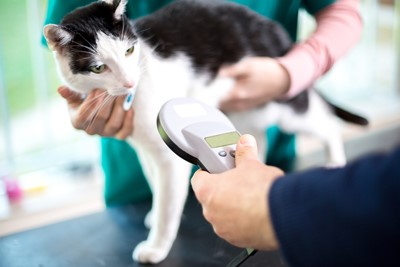
Inserting the microchip is simple and causes minimal or no discomfort. The microchip comes pre-loaded in a syringe, ready for insertion. The entire procedure takes less than 10 seconds. Post-injection reactions are very rare and the encapsulated microchip remains in place permanently.
The scanner is a hand-held device used to detect the message encoded in the microchip. The scanner is passed over the animal, paying particular attention to the area between the shoulder blades. If a microchip is present, the 10-digit number (encoded in the capsule) is read by the scanner. Scanners are provided to animal control, humane shelters and other rescue organizations so that all stray pets are scanned and those with microchips are reunited with their owners. Veterinarians can also purchase scanners for use in their hospital.
The veterinary hospital where the microchip is implanted records the pet’s information and its unique microchip identification number. When a lost pet is found and scanned, the veterinary hospital is immediately contacted. Since most veterinary hospitals are not open 24 hours a day, it may take some time before you are notified. In addition to this standard registration, you can register your pet in your own name for a charge of $15-20. By doing this, as soon as your pet is found, you are notified.
Along with the additional registration fee, we recommend that you update your personal information with the microchip database on a regular basis. It is also advisable to have your veterinarian test the microchip on an annual basis in order to make sure that it is properly transmitting data.
April is Heartworm Awareness Month
April 25, 2022
Pets and their people love being outside in the summertime - and so do mosquitoes. Because mosquitoes are the most common carriers of heartworm disease, keeping pets up to date on preventive heartworm treatments during mosquito season is especially important.
Heartworms are exactly that—large worms that live in the hearts of cats and dogs. Known as Dirofilaria Immitis, heartworms are long, spaghetti-like worms that range in size from 6 to 10 inches. Heartworms are almost always transmitted by mosquitoes. A mosquito bites an infected dog or cat; that mosquito picks up microfilariae, a microscopic version of the heartworm. When that mosquito bites your dog or cat, the heartworm microfilariae are transmitted to him / her. Within 70 to 90 days, the microfilariae make it to your pet's heart and, once mature, begin reproducing. The cycle then begins again.
Signs of heartworm disease in pets vary based on the age and species of the pet and the number of worms present. Because the worms are usually located on the right side of the heart and lung, coughing and shortness of breath are common signs in both dogs and cats. Dogs that have just acquired the disease may have no signs, while dogs with a moderate occurrence of the disease may cough and show an inability to exercise. In extreme cases, dogs may experience fainting, weight loss, fever, abdominal swelling and death. In cats, the symptoms of heartworm disease are similar to those of feline asthma, including coughing and shortness of breath. Some cats may exhibit no signs of the disease, while others may suddenly die.
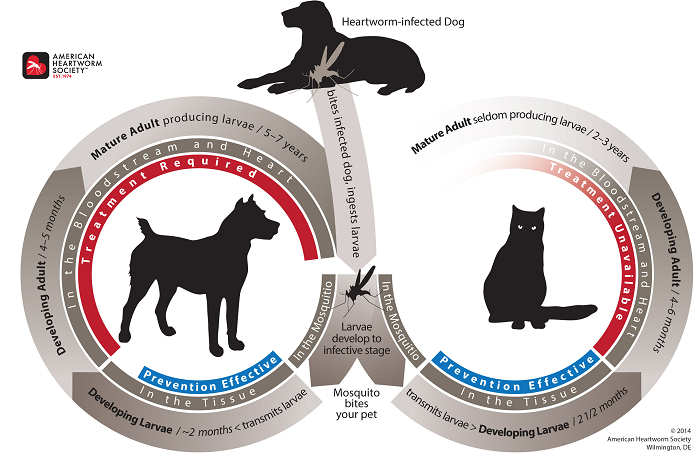
When it comes to preventing heartworm disease, pet owners have a number of options. Before beginning preventive medication, pet owners should have their pets tested for the presence of heartworms. If heartworms are present, a treatment plan should be discussed with your veterinarian. Most heartworm prevention is done by administering your pet a once-a-month heartworm preventive medication. Many of these monthly products are administered as a chew-able treat. Some are combined with other preventive medications. Your veterinarian will recommend the product that is best suited for your pet.
If you would like to have your pet tested for heartworm or you would like additional information about the disease, please contact your veterinary hospital.
Garden Safety Tips for Pets
March 18, 2022
Spring is upon us, and that means spending more time outdoors! If you'll be tending to a garden thing spring season, make sure you are sticking to pet-friendly plants! There are so many different types of plants and garden items that could quickly become dangerous to your pet if ingested, so talk to us if you have any questions about your plants. We've created this guide to help you create a safe outdoor space for your furry friend to enjoy.
Research Plants Before Gardening
There are so many different types of plants that can quickly become dangerous to pets, so make sure you are researching before adding something to your garden. The most common poisonous plants include:
- lilies
- sago palm
- tulips
- oleander
- philodendrons
- azaleas
- autumn crocus
- marijuana plants
- yew
- cyclamen
- chrysanthemum
- english ivy
These are just some of the most common poisonous plants for pets, but there are many others. The best way to determine if a plant is safe for pets is to research the individual plant type before adding it to your garden. Many vegetables are also poisonous to pets, such as onions, garlic, leek, and chives. Tomato plants and unripe tomatoes can also induce vomiting if ingested due to a substance called tomatine. This substance fades as tomatoes ripen, which is why it is safe for pets to eat fully developed tomatoes. Other safe garden veggies include carrots, beans, peas, celery, and zucchini.
Keep Pets Out of Your Garden
Another way you can make sure that your pet does not ingest any potentially harmful plant is to take measures to keep them out of your garden entirely. That could mean adding fencing, potting plants out of reach of animals, or perhaps keeping plants in a greenhouse. Raising your garden beds or using hanging baskets can also keep your pet and plants safe.
Choose the Right Mulch
Some mulch can be poisonous to pets, like cocoa bean mulch. This mulch has a sweet scent that could actually attract a curious nose, but it can be deadly if ingested by your pet. Avoid using this type of mulch, and instead go for something like pine, cedar, or hemlock mulch which is not poisonous. However, still make an effort to keep your pet out of these areas because some mulch can cause internal injuries, like the pine needles in pine mulch.
Fertilizers, Pesticides & Herbicides
Pesticides, herbicides, and fertilizers all help our gardens thrive, but they are absolutely dangerous for your pet to ingest. If you see a pesticide warning on neighboring lawns, try not to walk your pet in those areas. Make sure you wipe their paws after coming inside from a walk to make sure you remove any traces of pesticides that they may have picked up. It is possible for your pet to lick the chemicals off their paws and get sick, but a quick cleaning can avoid this problem. When putting down fertilizer, keep your pet indoors or far away from the area. Even organic fertilizer and compost is hazardous to pets, so just try to keep your pet away from any fertilizer whenever possible. Things like decaying plants, bones, fish meal, and blood can all smell interesting to your pet, but they can cause a variety of major health emergencies if ingested. Toxins that exist in these spaces can cause poisoning and even death if consumed by your pet, so keep them far away.
This spring, make sure you are gardening with your pet's safety in mind! Call our office if you have any further questions about garden safety tips for your pets.
Household Items that are Dangerous for Pets
February 10, 2022
Everyday household items can quickly become dangerous for pets, so make sure you are taking proper precautions to keep harmful chemicals and potentially dangerous items out of reach. Poisoning can happen in an instant, so talk to our veterinarian about your pet's unique risks.
The clearest signs that your pet has been poisoned are excessive drooling, vomiting, diarrhea, excessive thirst, lethargy, weakness, and pale or yellow-ish gums. Depending on what they ate, a reaction could be immediate or it may take several hours.
If you witness your pet ingest something that you believe may be harmful to them, you can have them drink a small amount of hydrogen peroxide to induce vomiting. This is safe for pets in small quantities, and will help them spit up whatever they have in their stomach. Use a 3% hydrogen peroxide solution. The suggested dosage is 1 teaspoon per 5 pounds of your pet's body weight, but not more than 3 tablespoons. Any more than that or using a more highly concentrated solution could be damaging.
Household items that are toxic to pets include:
- antifreeze, mulch, fertilizer, insecticides, pesticides, pool chemicals, rat bait
- cleaning supplies, bleach
- alcohol, drugs, tobacco products, certain medications
- citrus oil extracts, grapes and raisins, coffee, onions, garlic, nuts, chocolate
- xylitol (sugar-free sweetener), salt, yeast products (raw bread dough)
There are several types of plants that can be poisonous to both cats and dogs, so keep this in mind when choosing what to incorporate into your garden. Minimize the amounts of plants in your home, or make sure plants are potted and out of reach. Any plant that is on the ground could be a choking hazard for pets, and it can be tricky to make sure you are only buying pet-friendly plants. Plants can vary widely when it comes to the risk they pose to animals, so make sure you are looking up anything you are thinking of adding to your garden or home.
The best way to handle a health emergency is to prepare for one. Have our number on speed dial in case you need to call on a moment's notice. You can also create an action safety plan designed around your pet's unique risks so that you are always prepared for the worst case scenario. Putting together a pet first-aid kit can save your pet's life in an emergency, so make sure you have one in your home and your car in case something happens while you are out with your furry friend. Fast action can truly save your pet's life, so over-preparing is not a bad idea!
Take proper precautions to keep harmful substances out of your pet's reach. Keep things like medications, alcohol, and cleaning chemicals in cabinets or closets where your pet can not access them. If you have any further questions about poison prevention for pets, call our office for further information.
Quiet! Solutions for Barking Dogs
January 20, 2022
The first five reasons for barking are rarely the cause of excessive or annoying barking. They are usually specific to certain situations and are short-lived. The sixth and seventh reasons are those most likely to be considered problem barking, and they are not unrelated. Barking for companionship can turn into barking for reward: The dog barks to get its owner’s attention, the owner comes to the dog to tell it to be quiet, perhaps petting it or playing with it, before going away again. The dog is quiet while the owner is there, but has learned that barking will bring the owner back. Thus the system of barking and reward is established.
A solution, again, is to spend more time with your dog and have it near you rather than tied up somewhere separate from you. However, if your dog is separated from you and it begins to bark to get your attention, do not immediately go to the dog. It must learn that barking will not guarantee your presence. By spending more time with the dog at regular intervals not instigated by barking, your dog will feel more assured that it will get sufficient attention from you and will not have as much inclination to bark for companionship.

Teach Your Dog To Stop Barking By Understanding Prevention Steps
How do you teach a barking dog to distinguish between friends and strangers?
The solution is to show the dog that certain individuals like garbage collectors or the mailman are, indeed, friends. To accomplish this, the dog has to be introduced to these people and given an opportunity to get to know them. While this is not always practical, it is nonetheless a potential solution. As you restrain your dog, stop delivery people and have a short conversation with them, letting them meet the dog for a brief period. Repeat and lengthen the process over the next few weeks. Eventually, your dog should accept these individuals and all should be well until your regular mailman is sick and another person takes his place.
What do you do with a dog that barks at guests in your house?
One solution is to take the dog to another room and give it something to do. Or, if the guest comes to your home often and you don’t want to have to lock up the dog every time, work to gradually introduce one to the other. Have the guest get on his knees, pet the dog, offer it a treat, and more or less become part of the family. Let your dog establish the speed at which this relationship develops: Don’t force it or your dog may become alarmed by a pushy guest.
How do you deal with a dog that barks at the phone?
This is simply a case of a dog that has been rewarded for barking at a ringing phone. When the dog barks, someone eventually answers the phone and it stops ringing. To stop your dog from doing this, have a friend call and let the phone ring until the dog loses interest. Continue over a period of days, and in time, the dog will learn that barking at the phone accomplishes nothing.
Finally, what do you do with the dog that barks while you are away from home?
There are several possible solutions. One is to act as if you are leaving, then stand outside the door until the dog barks. When it does, return and scold verbally. Another is to get your dog a companion—but you might end up with two barkers! A third is to use a sound-activated tape recorder. When the dog barks, the sound switch turns on the tape recorder for a minute. The tape plays your voice scolding the dog. Some systems can repeat as many as 45 times while you are away.
The best way to reduce your dog’s barking is to pay attention to the reasons for the barking. If you can satisfy the dog’s needs, barking will automatically be reduced. By the same token, learned barking can be extremely persistent. Internal rewards can cause the cycle to go on for years.
The best solution to barking is prevention, so be aware of the possibilities and work to stop problem barking before it starts.